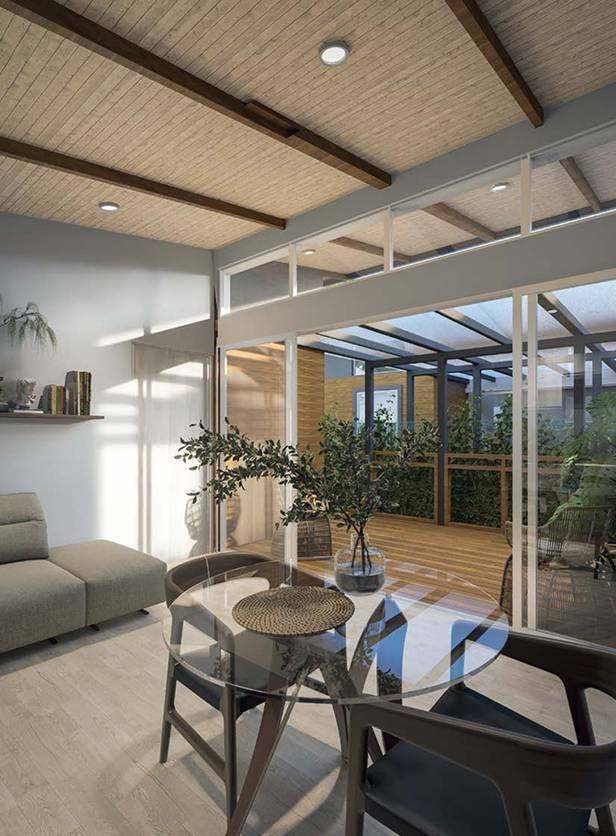
If you have decided on Costa Rica, the next fork in the road is whether to buy an existing home or build a new one. Both are common paths for expats, and neither is automatically better. The right answer for building vs buying a home in Costa Rica depends on how much you value speed and certainty against control and a brand-new home. Here is how the two compare on the things that matter most.
Is it cheaper to build or buy a home in Costa Rica?
It depends on what you are comparing. A resale home has a known price, but you inherit its age, layout, and any deferred maintenance. Building lets you put your money exactly where you want it and start with new systems, which can mean lower upkeep for years.
Custom, one-off construction can run over budget if you are not careful. That is why fixed-price, prefabricated home models in a planned community are increasingly popular: you get much of the upside of building new, with pricing that is set out in advance rather than discovered along the way. It is often a strong value path for expats who want a new home without open-ended cost risk.
How much longer does building take?
Buying is almost always faster. Once you find a home and clear due diligence, you can close and move in within weeks. Building takes months, from design and permits through construction and finishing.
How many months varies with the model, the site, and the builder. Prefab and standardized models are generally quicker and more predictable than fully custom architecture. If your timeline is short, buying wins; if you can plan ahead, building is very manageable, especially with a builder who has done the same models many times.
What about customization and quality?
This is where building shines. When you build, you choose the layout, the orientation to catch breezes and views, the finishes, and features like a pool. You get a home suited to how you actually live, built to current standards, rather than adapting to someone else's choices.
With a resale, what you see is what you get, and major changes mean renovation, which brings its own cost and timeline. Buyers who prize customization and a new build lean toward building; those who find a home they love as-is may not need to.

Which option carries more risk?
Both have risks, just different ones. With buying, the risks are mostly about due diligence: confirming clean title, boundaries, permits, and condition. A good attorney and inspection manage most of this.
With building, the risks are about execution: the builder's reliability, staying on budget and schedule, and clear permitting. You reduce these dramatically by choosing an established builder and, ideally, a planned community with proven designs, set pricing, and infrastructure already in place. That structure is what turns building from a leap into a manageable project.
How does a planned community change the math?
A gated or planned community sits between pure custom building and buying a resale. You typically choose from a set of proven home models, place them on a prepared lot, and see pricing laid out in advance, while the roads, utilities, and security are already handled. You get a new, customizable home with much of the uncertainty removed.
That is the model we use in the hills above Liberia: pick your lot and home design, add features like a pool, and see live pricing before you commit. You can design your own home and see pricing, or take our quiz to see whether building fits your goals.
So which is right for you?
Choose buying if you want to move quickly, see exactly what you are getting, and avoid managing a project. Choose building if you want a new, efficient, customized home and can plan a few months ahead, particularly through a fixed-price model that caps your cost risk.
Many expats do both over time: they rent or buy something simple first to learn an area, then build the home they really want once they know exactly where and how they want to live. Whichever path you take, lean on a trusted local attorney and, for building, an established builder.